A founder who is not an engineer started a software company with Figma mockups and no outside money. It took one year from launch to cash breakeven and his revenue is growing 20% month over month. Yes, you read that right, month over month, not year over year.
How he did it has become a regular topic among my entrepreneurial friends and clients, and I've worn out his generosity introducing him to everyone who wants to learn more. So I interviewed him to extract his methodology, using Call Coach, a tool I built that tracks my questions during a call and suggests follow-ups.
His method starts from one rule: no random acts of marketing. More campaigns, channels, content and tools do not add up to more growth; they create noise. Growth comes from clear answers to five questions, in order:
- Who are we trying to win?
- What outcome are we offering?
- Why should they choose us?
- Where can we reach them economically?
- How do we repeat it?
The steps below answer those five questions, then add what he did that the five questions don't cover.
1. Pick a market you can reach and win
He chooses a market on three things: his past experience with it, its future potential given how the market is structured and where it is heading, and whether the way that market buys fits how he sells. He picked a market where, in his words, "I know what works here." He would not sell to restaurants, which need door-to-door sales and cold calling, and cancel often.
Reach matters as much as fit. A bootstrapped company needs cheap channels, so ask whether you can reach these buyers by cold email, phone or LinkedIn, and whether they answer. He picked a concentrated market, so he could reach many buyers for little money. The narrower you define the buyer, the more likely your whole market gathers in one room, such as an industry conference.
Inside the market, he aims at the narrowest ideal customer: a specific person, at a specific kind of organization, with a specific problem. He borrows Kellblog's "bullseye": when going from zero to one, "focus on something small where you can win."
A narrow market pays off. You understand the buyer better, see patterns sooner, learn to handle the same objections, get more referrals and learn the buying process in depth.
He writes the ideal customer as tiers. Tier 1 is where limited time and money go first. Tier 2 is workable but harder. Tier 3 is a poor fit. His tier 1 names the buyer's title, the organization's size and region, the problem, and signals such as already paying for an expensive tool. He ranks partners the same way. Your first version is a best guess. Over time, data from real customers sharpens it.
For him that meant the smallest buyers in his market. Large organizations bring privacy and security reviews, painful purchasing and slow replies. Small ones can buy the day of the demo. That early revenue paid to build the product further and move up to larger buyers. He calls this the classic startup play of disrupting the low end of the market: Clayton Christensen's low-end disruption, from The Innovator's Dilemma.
One more rule. In a business you already run, find the next customers by looking at your best ones: happiest, highest spend, fewest support tickets, most referrals.
2. Unbundle a bloated product and sell on price
He took one part of a big platform that was overserving some of its customers, and built only that part. The strategy was to "come up from the bottom with a cheaper, simpler product." Product and price together had to be "10x better for only our ideal customer."
"I actually like selling on price." He prices at 20 to 30% of the main competitor and wins 55 to 65% of head-to-head deals. He can price that low because the whole company is built around AI. A small team runs it, and everything that can be AI-enabled has been (step 9 shows how).
3. Sell it before you build it
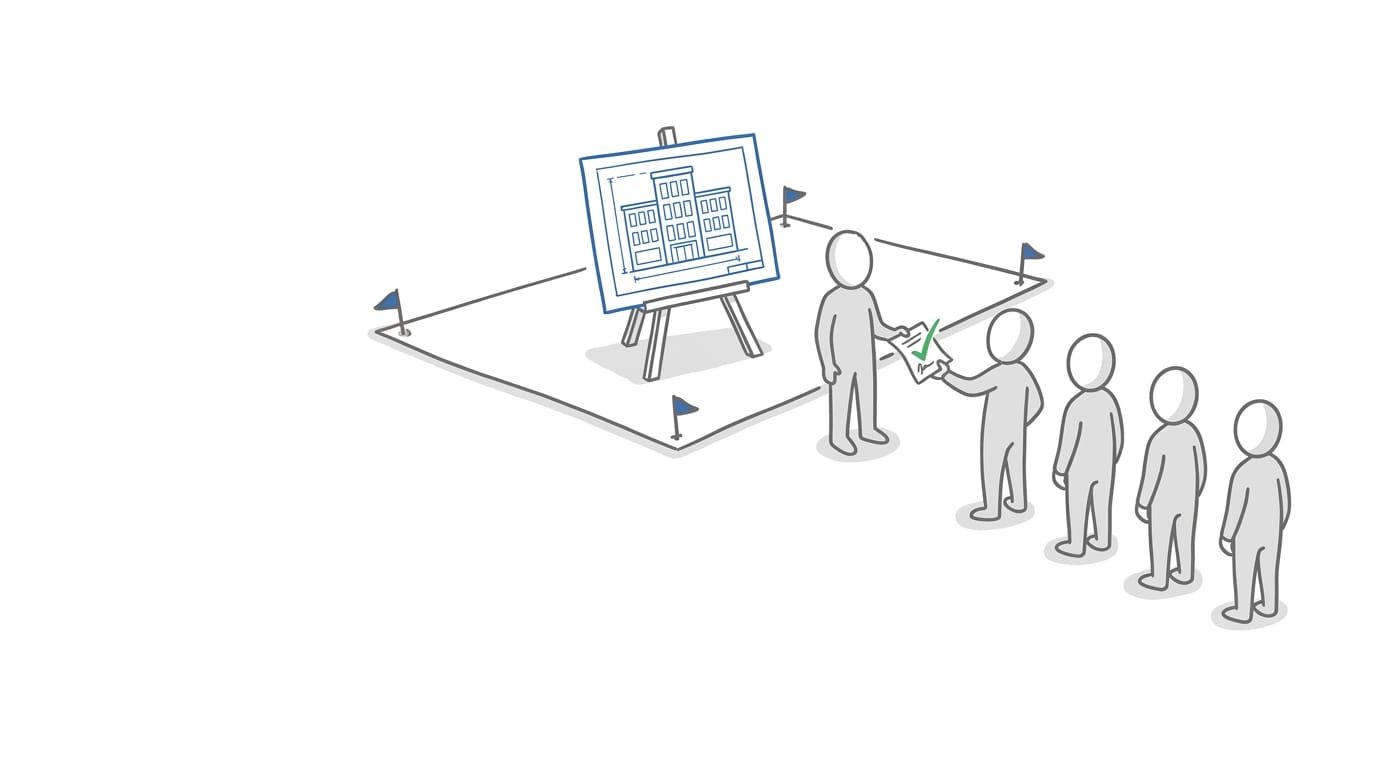
He built nothing before going to market. He made a Figma prototype to check that his idea would work, then took it straight to buyers, with no delay and no code. He found his reviewers with cold email. His first campaigns went to buyers in his target market and did not pitch. They asked for feedback, with a 2-minute Loom video walking through the Figma files. On the follow-up calls, people asked, "Can I buy that now?" He told them it was "coming in a month" and offered 50% off to pay that day.
Within weeks, a customer signed a multi-year contract and paid half up front, while still paying the competitor it already used. A small group of those early reviewers bought at the discount. He calls that "enough signal to tell that we were onto something," not product-market fit. What shipped "wasn't very different" from the prototype.
He still sells before he builds. When he plans a new feature, he adds a one-line "coming soon" note with its price to his pricing page, and customers can buy it before it exists. One feature sold for about two months before it shipped. The same test works without software: sell from a drawing, a sample or a one-page offer before you hire, stock or build.
4. Sell an outcome, not a product
A product is what you deliver. An offer is the result a specific buyer gets: package, price, proof, risk and timing together. His template: we help [specific market] achieve [measurable result] within [timeframe], or [risk reversal].
To strengthen an offer, raise the value of the outcome and the buyer's confidence they will get it. Cut the time, the effort and the risk, for example with a guarantee.
Price to the buyer's constraints, not your costs. At a company he worked at before, buyers on fixed annual budgets found every extra purchase painful, and per-unit pricing forced a new purchase each time they grew. He replaced it with one unlimited licence at about five times the old typical deal. Buyers bought once and expanded without another purchase.
Timing can be part of the offer too. Those buyers evaluated early in the year but had money only when the next budget opened. He let them commit and start right away, invoiced when the new budget opened, and backed it with a money-back guarantee. Decisions moved earlier. He still works this lever. He keeps adding products to raise his annual contract value, and raises prices on existing products as he goes, so customers expect it.
5. Say the same six things everywhere
A marketing message names your category, why someone should buy that category, and why your product within it. It is also the blueprint for the website, collateral and sales calls, so everyone has to be able to remember it. It answers six questions:
- Who is this for?
- What is it?
- What problems does it solve?
- Why would I buy it?
- Why is it different from the seemingly identical ones?
- Why should I believe you?
Use the same words on the website, in emails and decks, and on calls; customers start repeating your language back. Write for the level you can actually reach. Copy written for junior staff gets you conversations with junior staff.
Category framing can decide deals. At that same company, a competitor reframed the purchase from a communication tool to a communication and teaching tool, brought in more senior buyers, and won 60 to 70% of head-to-head deals. The fix was to recognize the shift, broaden the category and strengthen the bundle. The win rate recovered to about even.
His own message comes down to three key points, each backed by three pieces of proof. He built it from the StoryBrand framework and Kellblog's best-of posts. Both the points and the proof change as he learns. And when he emails a prospect who has a customer nearby, ideally a 10-minute drive away, he names that customer.
6. Talk to customers: meetings equal money
"If we aren't talking to customers, we don't make money. Meetings equal money."
He chose not to let customers set themselves up. Every new customer gets an onboarding call where he shares his screen and sets up the account for them; only one has ever insisted on skipping it. For the customer, it feels like a managed service. For him, it means walking through his own product's setup every day, and every call turns up something to fix. A small issue gets fixed right away; a big one goes on the list.
After onboarding, customers get check-ins at 1, 6 and 12 months, plus a weekly webinar. Renewals go out in waves, with add-on and multi-year discount offers.
He asks for referrals when customers feel the value: at the start, midway, and about three months in. He presents at local peer groups, ties discounts to referrals, and recognizes the customers who champion the product with swag, sponsored lunches or discounts. He tailors each ask to the person.
7. Run cold email as a system
Cold email is his primary marketing channel, and he is very happy with what it delivers. For him it is the fastest and cheapest way to reach buyers he can identify by name. It is the workhorse of his growth.
Many owners avoid cold email because they hate receiving it. He thinks that misreads the problem: "You don't like receiving bad emails." People dislike messages that offer them nothing and don't sound human. The right offer to the right person is welcome, the same way a good salesperson at the door is different from a bad one.
AI still doesn't write like a person, so he lets it help with drafts but does most of the writing and editing himself. His test: read the email out loud, or read it to a friend, and see whether it sounds natural.
The setup is 100 sending domains with 3 mailboxes each. Each mailbox sends 3 emails a day, up to about 900 a day. He does not send that every day: when the team can't keep up, he throttles it down. He runs it in Smartlead, buys contact data specific to his market, and cleans it with LeadMagic. The whole system costs a fraction of one salesperson.
Per 100 emails, he gets 4 to 8 replies, 2 to 4 of them positive. About half the positive replies become demos, and about 60% of demos close.
That predictability is the real prize. His rule is simple: if he does about 100 activities, he can expect a known number of conversations, qualified calls and customers. A predictable pipeline is a winning business. When you can predict growth, you can decide how much to spend, when to hire and how much cash you will have, instead of hoping next month looks like this one. You can also turn growth up or down on purpose, which is exactly what he does when he throttles his sending to match what his small team can handle.
Because he knows those rates, he knows what each email is worth in revenue. That turns the channel into a formula: activities × conversion rate × contract value = result. A contractor's version is bids sent × win rate × average job. A clinic's is new patients booked × patients who complete care × average plan. Each lever has its own fix:
- Volume: more outreach.
- Booking rate: targeting, offer and message.
- Show rate: qualification and follow-up.
- Close rate: lead quality, proof, offer and sales process.
- Contract value: price, packaging and the buyer's authority.
- Lifetime value: delivery, retention and add-ons.
Once you have maxed out a channel's volume, growth comes from better conversion, larger contracts and finding the next channel.
Personalization does the heavy lifting. He buys contact data from five or six vendors that specialize in his market, plus a general one. He uses software built with AI to scan prospects' websites and see which ones use a competitor he can replace. He calls that out in the email, because switching would save them a lot of money; it is one of his most effective messages. Each contact gets one email every two weeks, across a pool of about 50,000 people at any time. His main domain never sends cold email. Many prospects won't give up their time for a meeting right away, so his emails often offer a short Loom video with more information instead.
He does not test small wording changes against each other; for a small business that is a waste. He tests wildly different ideas instead.
8. Keep the channels that pay and cut the rest
He judges every channel on six questions:
- Does my ideal customer spend time there?
- Is there enough volume?
- How quickly do results come?
- Does the deal size cover the channel's cost?
- How long until the cash comes in?
- If it works, can I easily do more of it?
A channel is repeatable when you can control or reliably buy the input, you know the conversion rate at every stage, those rates hold as volume grows, customer value exceeds the cost to win and serve the customer, and you can deliver without quality slipping. Throttle marketing to what you can serve. Leads you can't serve well are waste.
| Channel | What he found |
|---|---|
| Outbound email | Fastest and cheapest path to identifiable buyers |
| Partners | Economical, but slower and hard to run |
| Referrals | Excellent quality, hard to generate at volume |
| Events | Highly targeted, but expensive and cash-hungry |
| Paid ads | Too expensive for his deal size and cash |
| Search (SEO) | Works and worth doing, but too slow to drive fast growth |
What works for him: cold email, events, resellers and a little SEO. Resellers came about 6 months in, once he had traction. The best way in was asking a customer to introduce him to their reseller.
His best partners are value-added resellers with engaged sales teams that accept his standard terms and payment within 30 days. Partners who run the product for their customers now work well for him too. He avoids partners who won't pay until they are paid.
What he cut:
- Ads. A few months of LinkedIn and Reddit ads, which he calls "silly." He found ads hard and expensive to get right: winning one customer could cost thousands of dollars, and running ads was not his strength. With a narrow market and small deals, they did not pay back. That will not be true for every business.
- Free trials. They "didn't work at all."
- Local radius email. A separate campaign to prospects within 25 miles of a new customer drew about one reply per 40 to 100 emails. It was too hard to scale.
9. Use AI to build the product and to run the business
He uses AI in two different ways, and it helps to keep them apart. The first is software development: building the product his customers pay for. The second is process automation: doing the routine work of running the company. This is a big part of how a small team can run the whole business.
Building the product
He is not an engineer, yet AI writes about 95% of his product's code. He felt ready to build this way once the AI models got good enough, and he has had dozens of changes accepted into the product in a few months. A developer reviews every change, and each one is tested on a private copy of the site before customers see it.
His rule is that AI can write the code, but it has to prove the code works. For each change, he:
- Writes clear requirements, plus a standards file that tells the AI how his code should be written.
- Has the AI test the change on every screen size and in every state, and show its work with before-and-after screenshots and a video of the whole flow.
- Runs accessibility, security and scalability checks.
- Has three different AI models review the change, and has the AI write the documentation.
"When we get bugs, it's usually because we missed a requirement." The hard part is no longer writing code. It is testing and checking the work, and his list of things to build keeps growing.
Running the business
Separately, he uses AI to do the day-to-day work of the company. AI only does this well when it can see your information, so he connected it to his billing system, customer database (CRM), call recordings, email and documents, design tool, project management and cold email system. With that access, it:
- Turns sales call recordings into social posts and schedules them.
- Preps him for demos and drafts quotes afterward.
- Scores his sales calls and posts feedback in Slack.
- Updates his sales forecast and sends it to him every day.
- Finds leads, checks their email addresses, drafts the copy and loads it into the cold email system.
- Updates the website when the product changes, and watches competitors' websites.
- Finds grants and other government opportunities.
- Cleans up the customer database and analyzes how each reseller is performing.
To decide what to automate, he answers five questions, then improves the result over time:
- What recurring job are you trying to improve?
- What information or systems does the AI need to see?
- What useful output should it produce?
- What rules define acceptable work?
- What must a person still review?
He keeps every AI idea on one list and reviews it daily, so he stays on core objectives instead of chasing rabbit holes.
What he learned, and what's next
Asked what he would do differently: wander less, skip the ads, incorporate faster, and set up a US entity from day one if selling to government.
"I'm fully confident in my ability to do this again." For a second company, he would build the product in the first 2 weeks, then set up a website and cold email domains and start sending. He is aiming for 2 to 3 weeks from concept to launch.
His own company took "a year" to reach cash breakeven. A repeat could take about 3 months: it "depends on how much I want to pay myself."
To find the next opportunity, one idea he has is to look for products a private equity firm has bought and repeatedly raised prices on, then have an AI agent read what customers say about them on Reddit or in Slack communities. Say you check three products and find that 40% of the comments are negative. The agent can also tell you who likes each product and who doesn't, with their roles and employers.
That would tell you where the opening is. Customers would be spending a lot on a product they don't love, because it solves a problem that matters to them. Products like that usually do many things, so you would pick the part that matters most and that you can build most cheaply, the same unbundling as step 2. Then you would build that part well and price it low enough to be "10x better" for the right customer.
Further reading
His own recommendations:
Brian Balfour, Four Fits growth framework, for thinking about fit between market, product, channel and model.
Joel Spolsky, Strategy Letter I: Ben and Jerry's vs. Amazon, on growing slowly and profitably versus getting big fast.
Donald Miller's StoryBrand framework, for messaging and defining the customer.
Related articles:
Who Is Your Most Valuable Customer?: how to pick the narrow ideal customer that step 1 starts from.Where Are You Playing?: the Market Map, for seeing who you can reach and through which channels.
Who Are You Really Competing With?: knowing the competitor you are unbundling and pricing against.
Your AI Is Overpaid For Most Of What It Does: how I built Call Coach, the tool behind this interview, and why narrow AI models keep automation cheap.